
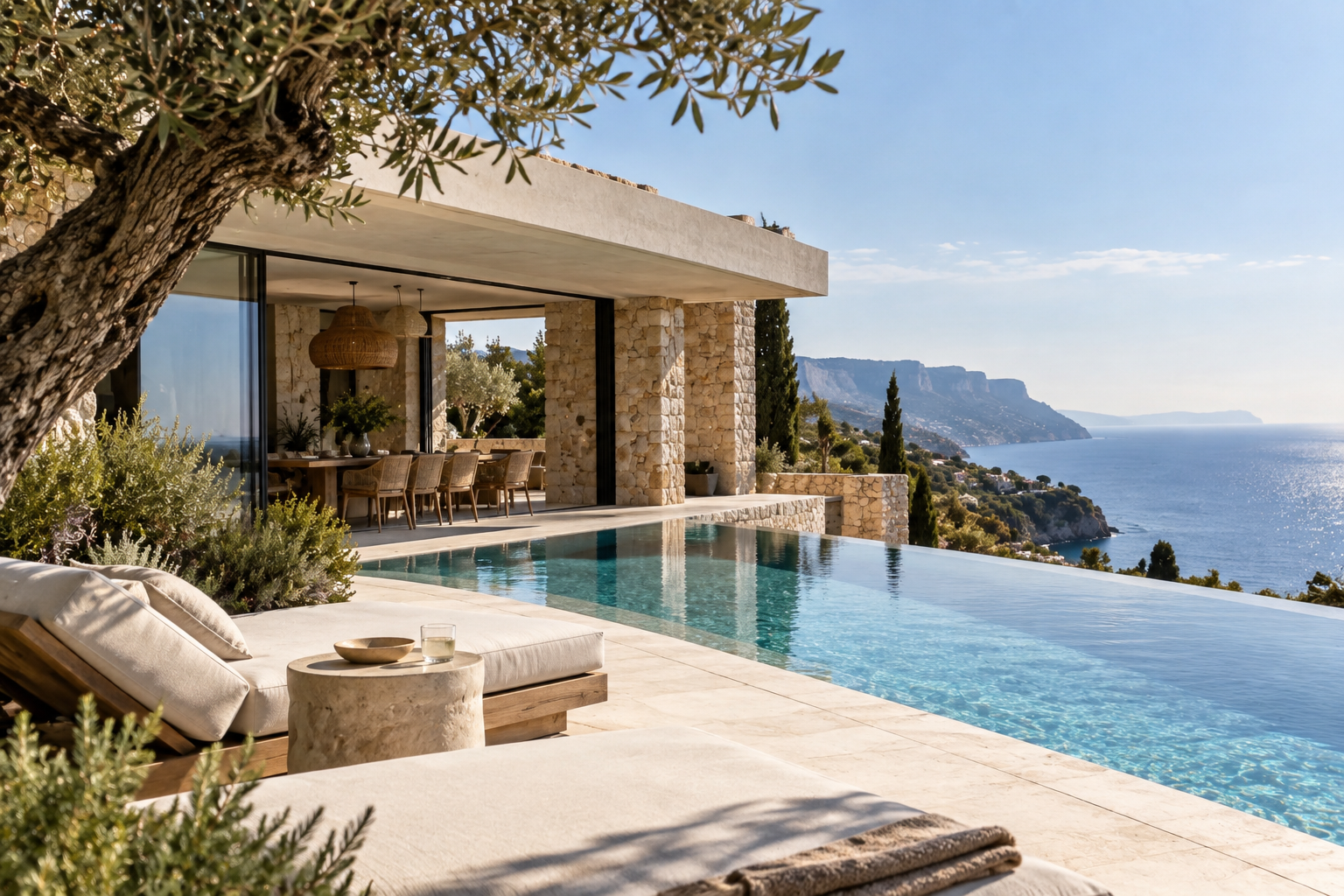
Mediterranean interiors have a distinctive way of making a home feel connected to its surroundings. Natural stone carries the colours of the landscape into the living room, large windows frame the coastline, and shaded terraces become part of the everyday living space. Yet beautiful materials and impressive views are only part of the equation. The placement of furniture, the quality of lighting and the relationship between private and communal areas determine how comfortably a residence functions. Explore the design details that shape luxury homes across the Mediterranean and discover what deserves attention beyond the photographs.
What makes Mediterranean interior design distinctive?
Mediterranean interior design reflects the architectural traditions, climate and materials of southern Europe. A contemporary villa in Marbella may feature expansive glazing, open-plan living areas and minimalist furniture, while a restored country house in Provence may preserve timber beams, stone floors and traditional shutters. Both can express a Mediterranean identity through their relationship with natural light, outdoor spaces and the surrounding landscape.
Contemporary interiors often combine regional materials with modern furniture, integrated technology and carefully planned layouts. The aim is to create rooms that feel visually coherent and remain practical throughout the year, whether the property serves as a permanent residence or a seasonal retreat.
Several design elements frequently define these interiors:
→ Natural stone and timber – limestone, travertine, oak and other materials introduce texture and connect the interior with the surrounding landscape;
→ Warm, restrained colours – ivory, sand, cream and muted earth tones create continuity between rooms without overwhelming their architectural details;
→ Generous natural light – windows, glazed doors and internal courtyards illuminate living spaces and frame selected views;
→ A strong indoor-outdoor connection – terraces, patios and gardens influence the layout of rooms and the choice of furnishings;
→ Regional craftsmanship – ceramics, joinery, plaster finishes and bespoke architectural details give each residence a more individual character.
Living rooms that balance architecture and everyday comfort
The living room often establishes the visual identity of a Mediterranean villa. Expansive windows can frame a sea view, while sliding doors connect the principal seating area with a terrace or landscaped garden. In contemporary residences, open-plan layouts may bring together several seating arrangements, allowing the room to accommodate both quiet evenings and larger gatherings.
The proportions of the space deserve as much attention as its appearance. Oversized furniture can interrupt circulation, while sofas positioned too far apart can make conversation uncomfortable. A well-considered layout allows residents to enjoy the views without sacrificing practical access to the terrace, dining area or other parts of the home.
Furniture that complements the architecture
Furniture should respond to the scale and character of the room. High ceilings and large glazed openings can accommodate substantial sofas, sculptural armchairs and generous coffee tables. Smaller rooms in historic residences may benefit from more compact pieces that preserve circulation and allow original stonework, fireplaces or timber details to remain visible.
Material selection also matters in homes exposed to strong Mediterranean sunlight. Upholstery fabrics differ in their resistance to fading, durability and cleaning requirements, while polished surfaces may produce glare near large windows. Buyers considering a furnished property should examine the condition of the furniture and assess whether its arrangement suits their intended use of the space.
Lighting that changes the atmosphere after sunset
Natural light defines many Mediterranean interiors during the day, but artificial lighting determines how those same rooms feel after sunset. A combination of ceiling fixtures, wall lights, table lamps and discreet architectural lighting can illuminate different areas without relying on a single bright source. Carefully positioned fixtures can also highlight textured stone, artwork or architectural features.
The most practical lighting schemes allow residents to adjust individual zones according to their activities. Dining areas, reading corners and circulation routes have different requirements, while terraces visible through large windows should form part of the overall composition. During a property viewing, ask to see the lighting system in operation and check whether its controls are intuitive.
Kitchens and dining rooms designed for Mediterranean living
Kitchens occupy an important place in contemporary Mediterranean residences, particularly where everyday meals and entertaining extend onto outdoor terraces. Open-plan layouts can connect the kitchen with the dining and living areas, while a central island may provide additional preparation space and informal seating. Natural stone, timber cabinetry and integrated appliances can establish visual continuity with the surrounding interior.
The size of the kitchen, however, offers limited information about its practicality. Storage, ventilation, worktop space and the position of appliances determine how efficiently the room functions. Buyers who regularly host guests may also value a separate preparation kitchen that allows food preparation to remain independent from the principal social spaces.
Open-plan kitchens and separate preparation areas
An open-plan kitchen can make entertaining more convenient, particularly when it provides direct access to the dining room and terrace. However, cooking aromas, appliance noise and visible preparation areas may affect the atmosphere of adjoining rooms. A separate preparation kitchen can address these concerns while allowing the principal kitchen to remain part of the social environment.
When evaluating a villa, consider the following details:
1. Worktop and storage space – check whether the kitchen provides sufficient room for preparation, cookware, tableware and everyday supplies;
2. Ventilation and extraction – examine how cooking aromas and heat are managed, especially in open-plan interiors;
3. Appliance placement – assess the distance between the refrigerator, sink, cooking area and principal preparation surfaces;
4. Access to outdoor dining – verify whether meals and tableware can be carried conveniently between the kitchen and terrace;
5. Lighting and materials – check task lighting, the condition of work surfaces and the maintenance requirements of cabinetry and finishes.
Bedrooms and private suites designed for relaxation
The bedrooms of a luxury Mediterranean residence should offer privacy, comfortable temperatures and an atmosphere suited to rest. Large windows can introduce natural light and attractive views, but their orientation also affects the amount of sunlight entering the room. External shutters, curtains and appropriate glazing can help manage early morning light and heat during the warmer months.
The arrangement of bedrooms within the property is equally important. A principal suite positioned away from communal areas may offer greater privacy, while guest bedrooms located near the main living spaces can provide convenient access to shared facilities. Buyers should consider how these arrangements correspond to their household, the frequency of guest visits and their preferences for accessibility.
Principal suites with dressing rooms and private terraces
A principal suite may include a spacious bedroom, dressing room, en-suite bathroom and private terrace. Its comfort depends on how these spaces connect. A dressing room positioned between the bedroom and bathroom can create a convenient route, while direct access to an outdoor seating area offers an additional place for relaxation.
Privacy deserves particular attention in properties with extensive glazing. A bedroom overlooking the sea may also be visible from neighbouring terraces or shared outdoor areas. The position of windows, landscaping and external shading can influence how comfortably the room can be used throughout the day.
Bathrooms where materials and functionality work together
Contemporary Mediterranean bathrooms frequently incorporate natural stone, mineral finishes, timber accents and restrained colour palettes. Walk-in showers, freestanding baths and generous vanity units can create a spacious interior, while carefully positioned windows introduce daylight and establish a connection with private courtyards or gardens.
The quality of a bathroom depends on technical details that may be less visible than its finishes. Waterproofing, ventilation, drainage and the suitability of materials for wet areas all influence long-term performance. Natural stone varies in porosity and maintenance requirements, and some textured surfaces may require more intensive cleaning.
Walk-in showers and freestanding baths
A walk-in shower can create a sense of openness, particularly when its flooring and wall finishes continue across the bathroom. Its practicality depends on the floor gradient, drainage capacity and position of the shower screen. Freestanding baths can provide an attractive focal point, although the surrounding space should allow comfortable access and cleaning.
During a property viewing, pay attention to water pressure, ventilation, storage and the condition of joints and seals. These details can reveal more about the bathroom’s everyday usability than the size of its fittings or the appearance of its stone surfaces.
The connection between interior design and outdoor living
One of the most distinctive characteristics of Mediterranean residential design is the relationship between enclosed rooms and outdoor spaces. A living room that opens onto a covered terrace, a kitchen connected to an outdoor dining area or a bedroom overlooking a sheltered courtyard can extend the experience of the home beyond its interior walls.
Materials and colours can reinforce this relationship. Similar stone finishes may be used inside and outside, while timber details and coordinated furniture create visual continuity. Exterior materials must nevertheless meet different technical requirements, including suitable slip resistance, drainage and durability under direct sunlight and changing weather conditions.
Terraces that function as outdoor living rooms
A covered terrace can accommodate comfortable seating, a dining table and carefully positioned lighting, allowing residents to use it as an extension of the principal living area. Its proximity to the kitchen and the arrangement of doors influence how easily the space can be used for everyday meals and entertaining.
A visually impressive terrace may be less comfortable if it receives intense afternoon sunlight or remains exposed to strong coastal winds. When comparing properties, assess the practical features that determine its usability:
→ Orientation and shade – examine the amount of direct sunlight received throughout the day and the protection provided by pergolas or architectural overhangs;
→ Wind exposure – check whether seating and dining areas are sheltered from prevailing winds;
→ Circulation – consider how easily residents can move between the terrace, kitchen, living room and garden;
→ Privacy – assess visibility from neighbouring properties, nearby roads and shared outdoor spaces;
→ Lighting and maintenance – review the illumination of steps and pathways, drainage arrangements and the upkeep required for outdoor furniture and finishes.
Regional influences in Mediterranean luxury interiors
Mediterranean interiors differ considerably between destinations. The contemporary villas of southern Spain, restored country houses of Provence, traditional stone residences of Italy and minimalist homes of the Greek islands draw on distinct architectural traditions. These regional differences influence the materials, proportions and atmosphere of individual properties.
Renovation also plays an important role in the character of a residence. Some homes preserve original architectural elements and introduce contemporary furnishings, while others adopt a fully modern approach inspired by local materials and colours. The suitability of either approach depends on the quality of its execution and how comfortably the interior supports everyday living.
Spain and contemporary coastal interiors
Luxury villas on the Costa del Sol frequently feature open-plan living areas, expansive glazing and interiors that combine natural stone, timber and neutral colours. Contemporary furniture complements these architectural features, while selected artworks, textured finishes and architectural lighting introduce individuality.
Marbella and its surrounding residential areas offer both newly built villas and renovated properties with different interior approaches. Buyers interested in the region can explore the Mediterranean luxury properties presented by Stefan Nita to compare how architecture, interior design and outdoor living come together in individual residences.
Provence and the character of traditional materials
Provençal interiors often incorporate stone floors, exposed timber beams, plastered walls and details associated with traditional country houses. Contemporary renovations may preserve these elements while introducing modern kitchens, bathrooms and furniture, creating a contrast between historic construction and present-day comfort.
Buyers considering a restored property should examine the quality of previous alterations and the integration of modern building systems. Original materials may require specialist maintenance, while older room proportions and window arrangements can influence furniture placement and the amount of natural light available.
Italy and the appeal of understated craftsmanship
Italian coastal and rural residences offer a wide range of interior styles, from contemporary minimalist spaces to restored homes with vaulted ceilings, stone walls and traditional flooring. Bespoke joinery, ceramics and carefully selected natural materials can introduce regional character without requiring elaborate decoration.
In historic properties, the relationship between original architectural elements and modern installations deserves particular attention. Buyers should establish whether previous renovations have addressed moisture, ventilation, insulation and the practical requirements of contemporary living.
The Greek islands and minimalist design
Contemporary homes in the Greek islands frequently reinterpret regional architecture through white plaster, natural stone, curved surfaces and restrained furniture. In the Cyclades, sculptural forms and carefully positioned openings can create distinctive interiors that respond to the surrounding terrain and coastal views.
The simplicity of the design places greater emphasis on the quality of finishes, proportions and lighting. Properties with extensive glazing or exposed terraces should also be assessed for solar protection, wind exposure and privacy, particularly in locations where neighbouring buildings overlook outdoor areas.
Art, decorative objects and the personality of a luxury home
Art and decorative objects can introduce individuality into a Mediterranean interior without overwhelming its architecture. A substantial artwork may establish a focal point in a minimalist living room, while ceramics, textiles and sculptural pieces can add texture to spaces with restrained colour palettes. The selection and placement of these elements should respond to the scale of the room and the materials already present.
The surrounding environment can also influence decorative choices. Coastal residences may incorporate colours and textures inspired by the sea and landscape, while restored rural properties may benefit from objects that complement their historic construction. Buyers of furnished homes should clarify which artworks, decorative pieces and bespoke furnishings are included in the sale, as these items may be excluded from the property inventory.
What to examine when choosing a home for its interiors
Interior photographs can communicate the atmosphere of a residence, but they rarely reveal how comfortably its rooms function throughout the day. A property viewing provides an opportunity to assess natural light, circulation, material quality and the relationship between private and communal spaces. It also allows buyers to identify potential changes they may wish to make after purchasing the home.
Before choosing a Mediterranean residence, consider these practical aspects:
1. Room proportions and circulation – assess whether furniture can be arranged comfortably without obstructing doors, windows or access to outdoor areas;
2. Natural light and solar protection – examine how the orientation of rooms affects brightness and indoor temperatures at different times of day;
3. Material quality and maintenance – check the condition of flooring, cabinetry, wall finishes and surfaces exposed to moisture or strong sunlight;
4. Privacy and acoustic comfort – consider visibility from neighbouring properties and the separation between bedrooms and communal spaces;
5. Storage and everyday functionality – review wardrobes, utility rooms, kitchen storage and the practical requirements of permanent or seasonal occupation;
6. Scope for personalisation – establish which furnishings are included in the sale and whether any intended alterations require technical assessments or permissions.
Finding a Mediterranean home that reflects your design preferences
Mediterranean luxury interiors offer a wide range of possibilities, from minimalist coastal villas with expansive glazing to restored country houses that preserve traditional materials and craftsmanship. The most suitable residence will reflect your aesthetic preferences while providing the layout, privacy and comfort required for your intended use of the property.
When comparing homes, consider how the interior design works with the architecture and surrounding landscape. Natural light, furniture placement, material quality and access to outdoor spaces can influence the experience of living in a property as much as its location or views. Whether you prefer contemporary simplicity, historic character or a combination of both, share your interior design preferences with Stefan Nita and explore Mediterranean residences that correspond to your vision of home.