
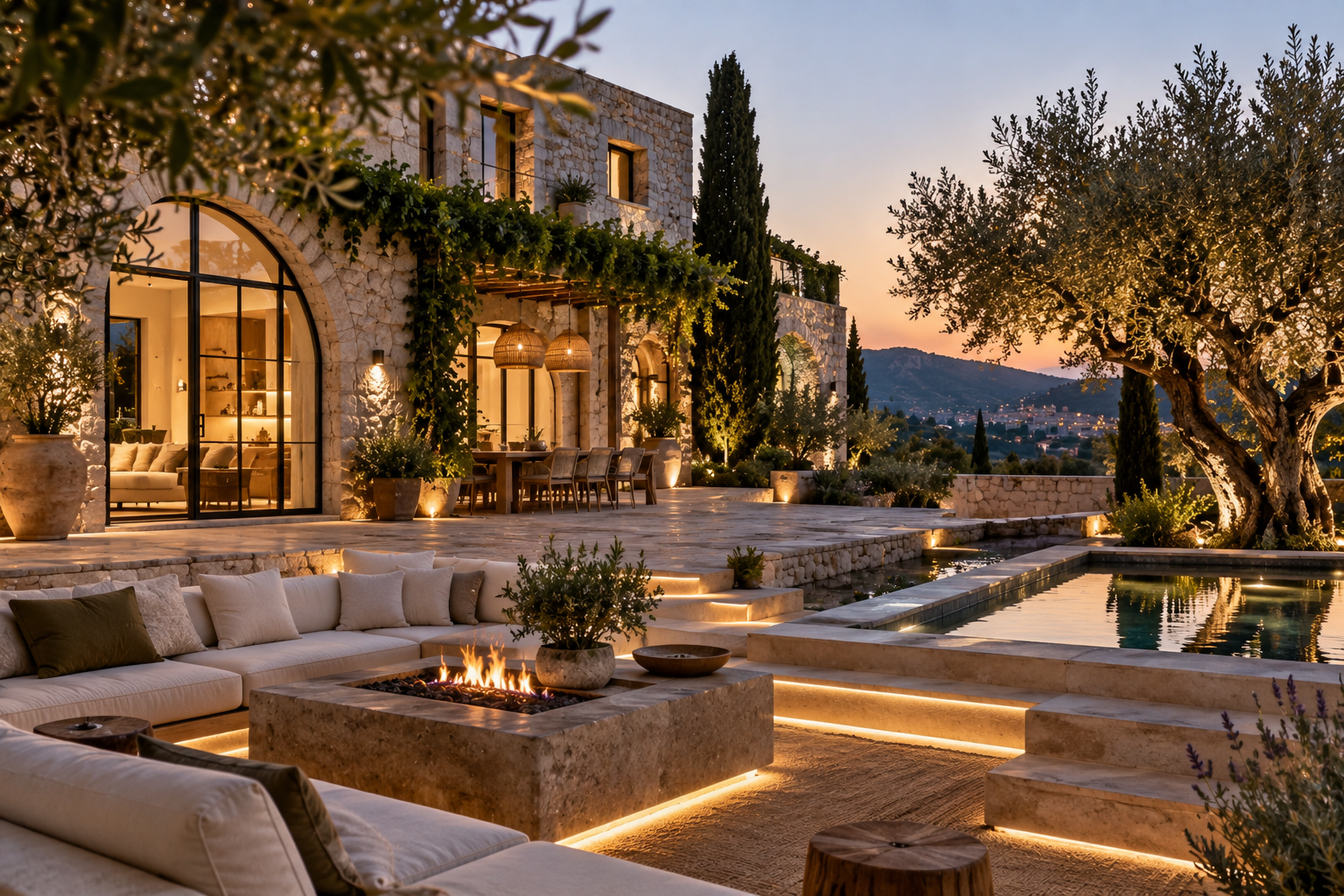
Today, architects reinterpret these elements through contemporary layouts, expansive glazing and natural materials, creating residences that combine regional identity with modern comfort. From the historic villas of Provence to the whitewashed houses of the Greek islands, discover the architectural features that define Mediterranean living and what makes them worth considering when choosing a luxury property.
What defines Mediterranean architecture?
Mediterranean architecture encompasses several regional traditions rather than a single architectural style. Homes in southern Spain, coastal Italy, Provence and the Greek islands differ in their materials, proportions and decorative details, although many share design principles shaped by warm summers, strong sunlight and the relationship between indoor and outdoor spaces.
Traditional buildings frequently use stone, lime-based plaster, timber and terracotta, with architectural features adapted to local construction methods and available resources. Courtyards, covered terraces, shutters and carefully positioned openings help manage sunlight, ventilation and privacy. Contemporary Mediterranean residences often reinterpret these elements through open-plan interiors, larger windows and modern building systems.
The most recognisable architectural characteristics include:
→ Natural materials – stone, timber, terracotta and mineral finishes introduce texture and connect the building to its surrounding landscape.
→ Shaded outdoor spaces – pergolas, covered terraces and courtyards create comfortable areas for dining, relaxation and entertaining.
→ Indoor-outdoor connections – doors, windows and transitional spaces establish a relationship between interior rooms, gardens and terraces.
→ Regional architectural details – arches, shutters, roof tiles and traditional plaster finishes reflect the building traditions of individual destinations.
→ Climate-conscious design – building orientation, shading, ventilation and insulation influence comfort throughout the year.
Spanish Mediterranean architecture and the character of Andalusia
Southern Spain offers a distinctive combination of traditional Andalusian architecture and contemporary coastal design. Whitewashed walls, internal courtyards, decorative tiles and shaded galleries feature in many historic properties, while modern villas introduce expansive glazing, open-plan interiors and terraces designed around the surrounding landscape.
The architectural character changes between historic town centres, established residential neighbourhoods and newer coastal developments. Buyers exploring southern Spain can encounter restored traditional homes, contemporary villas and properties that combine regional materials with modern layouts.
Andalusian courtyards and traditional villas
The courtyard occupies an important place in Andalusian residential architecture. Traditionally, it provides an internal outdoor space around which rooms can be arranged, often incorporating plants, decorative tiles and water features. Covered walkways and shaded areas create opportunities to use the courtyard throughout different parts of the day, while the arrangement of surrounding rooms can provide privacy from the street.
In larger villas, the courtyard may connect reception rooms, dining areas and guest accommodation. Contemporary interpretations can introduce retractable glazing, minimalist landscaping and modern lighting while preserving the courtyard’s role as a central architectural feature. When evaluating a property, buyers should consider the courtyard’s orientation, drainage, maintenance requirements and relationship with the principal living spaces.
Contemporary villas on the Costa del Sol
Marbella, Estepona and the surrounding residential areas offer examples of contemporary Mediterranean architecture that prioritise natural light, privacy and access to outdoor spaces. Large sliding doors, covered terraces, landscaped gardens and swimming pools frequently form part of the overall design, while stone and timber finishes introduce warmth into otherwise minimalist interiors.
The relationship between the building and its plot deserves particular attention. A hillside villa may offer expansive views but require careful planning of access, retaining walls and outdoor circulation. A property closer to the coast may provide convenient access to local amenities, although neighbouring buildings and street activity can influence privacy.
Buyers interested in the architectural diversity of southern Spain can explore the luxury residences presented by Stefan Nita and compare properties according to their design, location, outdoor spaces and suitability for year-round living.
Italian coastal architecture and the influence of regional traditions
Italy’s Mediterranean architecture varies considerably between coastal regions, with local materials, building techniques and historical influences shaping the appearance of residential properties. The stone houses of Puglia, the colourful buildings of Liguria and the hillside villas of the Amalfi Coast offer distinct architectural identities.
Traditional buildings often respond closely to their surroundings, with terraces, balconies and openings arranged according to the terrain and the available views. Contemporary renovations may preserve historic façades while introducing modern interiors, although the extent of permitted alterations depends on the property and applicable local regulations.
The Amalfi Coast and its terraced architecture
The steep terrain of the Amalfi Coast has influenced the way buildings are positioned and connected. Houses occupy narrow plots, terraces extend above the coastline, and stairways link different levels of towns such as Positano, Amalfi and Ravello. Pale façades, vaulted spaces and traditional materials contribute to the architectural character of the region.
For buyers, the relationship between the building and its surroundings is particularly important. A terrace with an uninterrupted sea view may be an attractive feature, but access, structural condition and the practicality of everyday movement between different levels deserve equal attention. Properties within historic areas may also be subject to conservation requirements that influence renovation and maintenance.
Puglia and the appeal of traditional stone houses
Puglia is associated with several distinctive forms of vernacular architecture, including trulli, masserie and traditional stone houses. Trulli are recognised for their conical stone roofs, while masserie are historic rural complexes that may incorporate courtyards, agricultural buildings and substantial stone structures.
Restored rural properties can offer generous outdoor spaces, mature olive groves and a strong connection to the surrounding landscape. However, older buildings require careful assessment of structural condition, moisture management, insulation and the integration of modern services. Buyers considering renovation should also verify the property’s legal status and any restrictions associated with its architectural or historical significance.
Greek island architecture and the beauty of simple forms
The architecture of the Greek islands reflects different local materials, climates and historical traditions. The whitewashed cubic buildings of the Cyclades are among the most recognisable examples, although other islands feature stone houses, tiled roofs and architectural influences that differ considerably from the familiar Cycladic aesthetic.
Traditional island settlements often use compact building arrangements, narrow streets and sheltered outdoor spaces. The scale and positioning of buildings respond to the surrounding terrain, while contemporary residences reinterpret regional forms through modern construction techniques and larger interior spaces.
Santorini and its sculptural architecture
Santorini is associated with whitewashed buildings, curved surfaces and structures integrated into the island’s volcanic landscape. Some traditional residences incorporate cave-like spaces excavated into the terrain, while terraces and courtyards provide outdoor areas within the island’s densely built settlements.
The island’s distinctive topography creates opportunities for unusual architectural layouts, but it also introduces practical considerations. Access may involve stairs and narrow pedestrian routes, while outdoor spaces can be exposed to strong winds and intense sunlight. Buyers should assess structural condition, moisture protection, accessibility and any applicable restrictions on alterations, particularly in historic settlements.
Mykonos and contemporary Cycladic villas
Mykonos combines traditional Cycladic forms with contemporary luxury residential architecture. White plaster, simple volumes and sheltered courtyards frequently appear alongside expansive glazing, minimalist interiors and outdoor entertaining areas. Modern villas may incorporate natural stone, timber and carefully designed landscaping to complement the island’s architectural character.
Privacy and exposure to wind are important considerations when evaluating properties on the island. The orientation of terraces, placement of swimming pools and design of outdoor seating areas can influence their usability throughout the day. Buyers should also consider the relationship between the property’s architectural design and its surrounding development, particularly in areas with a concentration of holiday residences.
Provence and the architectural heritage of southern France
Provence offers an architectural landscape shaped by traditional stone construction, terracotta roofs, timber shutters and rural estates. Historic farmhouses, village houses and country residences reflect the materials and building methods of their respective areas, while contemporary properties introduce modern layouts and energy-efficient building systems.
The region’s residential architecture is closely connected to its gardens and surrounding landscape. Courtyards, covered terraces, mature trees and carefully positioned openings provide opportunities to enjoy outdoor spaces while managing exposure to sunlight.
Provençal bastides and traditional country houses
The bastide is associated with substantial country houses found in Provence, although individual properties vary in their age, proportions and architectural details. Stone or rendered façades, shuttered windows and tiled roofs contribute to the regional character, while formal gardens and terraces may extend the living environment into the surrounding grounds.
When considering a historic property, buyers should examine the condition of the roof, masonry, windows and building services. The quality of previous renovations is particularly important, as inappropriate materials or poorly executed alterations can affect the building’s performance and character. Gardens and extensive grounds also require maintenance arrangements suited to the size and use of the property.
Contemporary architecture on the French Riviera
The French Riviera offers a different architectural environment, with contemporary villas positioned alongside historic residences and established coastal developments. Modern properties may feature extensive glazing, cantilevered terraces, stone cladding and carefully landscaped outdoor areas designed to take advantage of sea views.
In destinations such as Cannes, Antibes and the surrounding coastal communities, plot orientation and neighbouring development can influence both privacy and the quality of the views. Buyers should consider the balance between architectural openness and practical requirements such as solar control, security and comfortable year-round occupation.
Natural materials and the details that give Mediterranean homes character
The selection of materials plays an important role in the appearance and performance of Mediterranean residences. Stone, timber, terracotta and mineral finishes can introduce texture and visual continuity between interior and exterior spaces. Their suitability depends on the local climate, exposure to moisture and salt, maintenance requirements and the construction system of the building.
Contemporary architecture often combines traditional materials with glass, steel and engineered products. This approach can preserve a regional visual identity while accommodating larger openings, modern insulation and more flexible interior layouts. Material selection should nevertheless be assessed according to technical performance as well as appearance, particularly for properties exposed to coastal weather conditions.
Stone, plaster and terracotta
Natural stone can be used for façades, flooring, retaining walls and landscape features, although its properties vary according to the type and source of the material. Lime-based plaster and mineral finishes are associated with many traditional Mediterranean buildings, while terracotta appears in roof tiles, flooring and decorative elements.
The compatibility of materials is particularly important during renovation. Historic masonry may require different moisture-management solutions from modern construction, and replacement finishes should be selected with the building’s existing structure in mind. For new properties, buyers can examine the quality of installation, weather protection and maintenance requirements of exterior finishes.
Timber, shutters and architectural shading
Timber shutters, pergolas and covered walkways contribute to the appearance of many Mediterranean homes while also serving practical functions. External shading can reduce direct sunlight entering a building, and adjustable shutters allow residents to control light and privacy throughout the day.
Modern properties may incorporate automated blinds, retractable awnings and architectural overhangs. The effectiveness of these features depends on their dimensions, orientation and the position of the sun. When comparing residences, buyers should assess how the shading system performs during the hottest parts of the day rather than relying exclusively on architectural photographs.
Designing indoor and outdoor spaces for Mediterranean living
The relationship between interior rooms and outdoor areas is a defining consideration in many contemporary Mediterranean residences. Sliding doors, covered terraces and landscaped courtyards can create visual and functional connections between the home and its surroundings, while carefully planned circulation makes it easier to move between living areas, gardens and swimming pools.
Outdoor spaces should be evaluated according to their actual usability throughout the year. A terrace may offer an exceptional view but require additional shading, wind protection or drainage. Similarly, a swimming pool can form an attractive architectural feature while introducing maintenance, safety and technical requirements that should be considered before purchasing a property.
Several design features deserve particular attention:
→ Terrace orientation – assess sunlight, shade and wind exposure at different times of the day and throughout the year.
→ Indoor-outdoor circulation – examine how easily the principal living spaces connect to dining terraces, gardens and pool areas.
→ Privacy – consider sightlines from neighbouring properties, public roads and nearby outdoor spaces.
→ Landscape design – evaluate irrigation requirements, drainage, plant selection and the maintenance needs of the garden.
→ Outdoor lighting – check whether pathways, steps, dining areas and entrances are adequately illuminated without creating unnecessary glare.
→ Weather protection – review the provision of covered areas, suitable flooring and protection for outdoor furniture and equipment.
What to examine before buying a Mediterranean architectural property
Architectural character can be an important reason for choosing a property, but visual appeal should be considered alongside construction quality, legal documentation and the practical requirements of ownership. Historic houses, renovated rural estates and contemporary coastal villas each present different technical and maintenance considerations.
An independent property survey can help identify defects that may not be visible during a viewing, while legal and planning checks can clarify whether existing structures and alterations have the necessary authorisations. These assessments are particularly relevant for properties with extensive terraces, retaining walls, older masonry or substantial renovations.
Before proceeding with a purchase, consider the following aspects:
1. Structural condition – examine the foundations, load-bearing elements, roof, retaining walls and any signs of movement or water damage.
2. Planning and renovation permissions – verify the legal status of the building, extensions, swimming pools and previous alterations.
3. Thermal comfort – assess insulation, glazing, ventilation, shading and the performance of heating and cooling systems.
4. Coastal exposure – review the condition of exterior finishes, metal components and other materials affected by salt, humidity and wind.
5. Accessibility and maintenance – consider stairs, steep access routes, service areas and the ongoing requirements of gardens, pools and extensive grounds.
6. Long-term suitability – evaluate whether the layout, number of bedrooms, outdoor areas and proximity to essential services correspond to your intended use of the property.
Finding a Mediterranean home with architectural character
Mediterranean architecture offers an extraordinary range of residential environments, from restored stone houses and traditional courtyard villas to contemporary coastal residences with expansive glazing and carefully designed outdoor spaces. Each architectural approach creates a different relationship between the home, its surroundings and the way its residents use the property.
The choice should reflect both aesthetic preferences and practical priorities. Buyers who appreciate historic architecture may value original materials and regional craftsmanship, while those seeking a contemporary residence may prioritise open-plan living, modern building systems and convenient access to outdoor areas. Location, construction quality and maintenance requirements remain important regardless of architectural style.
Whether you are drawn to the stone estates of Provence, the sculptural forms of the Greek islands or the contemporary villas of southern Spain, the right residence should combine architectural character with the comfort and functionality you expect from a Mediterranean home. To explore properties that reflect your preferred design and lifestyle, share your architectural preferences with Stefan Nita and discover residential opportunities across the Mediterranean.