
Some occupy historic villas with discreet dining rooms and landscaped gardens, while others bring a contemporary approach to hospitality, wellness and cultural events. From the French Riviera to Marbella and the Italian coast, discover how members’ clubs fit into Mediterranean life, what distinguishes their different formats and which details deserve attention before applying for membership.
What defines a private members’ club?
A private members’ club is an organisation that provides access to selected facilities, services or activities under its own membership rules. Depending on the club, these may include lounges, restaurants, meeting rooms, cultural programmes, wellness facilities and private events. Membership can be based on an application, an invitation, a recommendation from an existing member or another admission process established by the organisation.
The atmosphere and purpose of each club can differ considerably. Some focus on professional networking and social events, while others centre on sport, dining, cultural interests or a particular residential community. A historic city club may offer a formal setting with established traditions, whereas a contemporary coastal club may place greater emphasis on relaxed hospitality and outdoor living.
Common features of private members’ clubs include:
→ Members-only spaces – lounges, dining rooms and other facilities reserved for members and their permitted guests;
→ A programme of activities – dinners, talks, exhibitions, sporting events or social gatherings organised throughout the year;
→ Membership privileges – access to particular facilities, services or events according to the membership category;
→ Guest arrangements – rules that determine when and how members may invite family, friends or professional contacts;
→ A shared social environment – opportunities to meet people through recurring activities and the club’s regular programme.
The appeal of members’ clubs on the Mediterranean coast
Mediterranean destinations attract residents and visitors with different lifestyles, from owners who spend several months a year at their coastal property to families who live in the region permanently. Members’ clubs can provide a familiar setting within this varied international environment, particularly for those who divide their time between several cities or countries.
The location and facilities of a club influence how naturally it becomes part of everyday life. A central clubhouse may be convenient for business lunches and evening events, while a coastal property with gardens, terraces and wellness facilities may suit members who prefer to spend an entire afternoon in one place. Opening hours, seasonal schedules and access arrangements deserve attention alongside the atmosphere.
Marbella and the Costa del Sol
Marbella and the surrounding Costa del Sol combine established residential neighbourhoods with golf courses, marinas, restaurants and year-round leisure facilities. Within this environment, members’ clubs may appeal to residents who want a regular place for social occasions, dining or activities connected to their interests.
The relationship between a club and a residential property can be particularly relevant for owners who spend extended periods in the region. A conveniently located clubhouse may become part of a weekly routine, while a club farther from home may be better suited to occasional events. Buyers exploring luxury properties in Mediterranean destinations with Stefan Nita can consider access to clubs and other lifestyle facilities alongside the location, privacy and architectural character of a residence.
The French Riviera
The French Riviera has a long-established culture of private hospitality, with settings that range from historic urban interiors to coastal terraces and landscaped estates. Members’ clubs in the region may offer dining, social events and facilities designed around the interests of their particular membership community.
For residents of Cannes, Antibes, Nice or the surrounding coastal towns, practical access can make a considerable difference. Traffic, parking arrangements and the distance between a residence and the clubhouse may influence how frequently its facilities are used, particularly during the busiest summer months.
The Italian coast
Along the Italian coast, the character of private clubs can reflect local traditions of dining, sailing, culture and social life. A clubhouse may occupy a historic building in a town centre or a waterfront setting connected to a marina or sporting facility. Its programme and membership structure will determine whether it functions primarily as a social venue, a leisure destination or a place organised around a shared interest.
For owners of seasonal residences, the club’s annual calendar is worth examining. Some activities may take place throughout the year, while others follow the rhythm of the local visitor season. The availability of facilities during the months when you expect to be in Italy should form part of your assessment.
Inside the contemporary members’ club
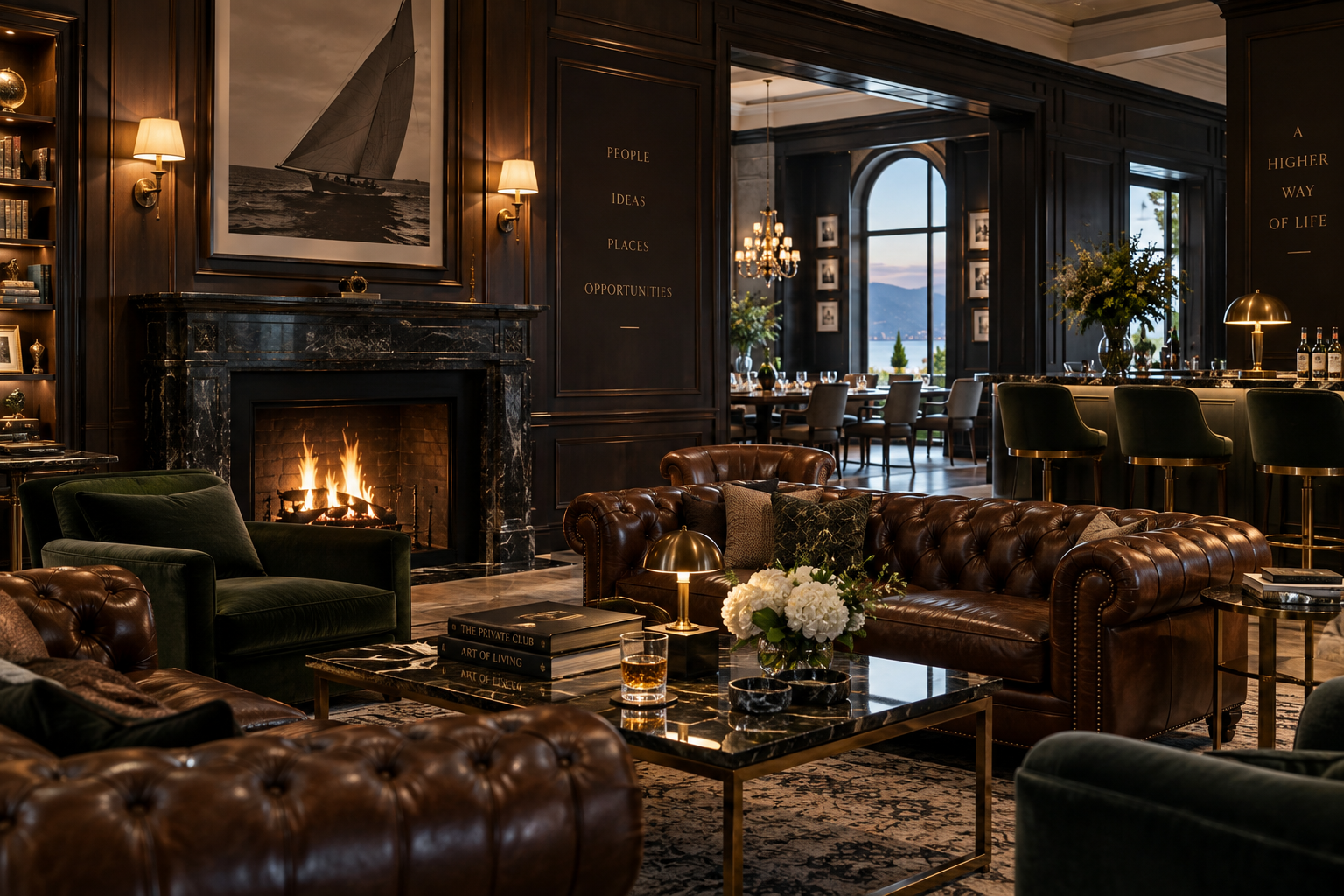
Interior design plays an important role in establishing the identity of a private club. Traditional clubhouses may feature timber panelling, leather seating, libraries and formal dining rooms, while contemporary venues often favour natural materials, flexible lounges and spaces that open onto terraces or courtyards.
The design should also support different ways of using the club. A comfortable lounge may be appropriate for informal conversation, but members who intend to work or hold private meetings may need quieter rooms. Similarly, a dining room designed for social occasions may have different acoustic and seating requirements from a space intended for presentations or cultural events.
Lounges, libraries and private dining rooms
Members’ lounges provide a setting for informal meetings, reading and conversation. Their atmosphere depends on furniture arrangement, lighting, acoustics and the level of activity permitted within the space. A club may also offer a library, dedicated work area or separate rooms for members who prefer a quieter environment.
Private dining rooms can accommodate family occasions, professional meetings or gatherings organised by members. Before relying on these facilities, check their capacity, reservation requirements, minimum spending conditions and rules concerning outside guests. Availability may differ substantially between weekdays, weekends and periods when the club hosts its own events.
Terraces and gardens as social spaces
In Mediterranean locations, outdoor areas can be central to the club experience. Shaded terraces, landscaped gardens and courtyards provide settings for daytime meetings, evening drinks and seasonal events. Their comfort depends on orientation, wind protection, lighting and the relationship between outdoor seating and the main clubhouse.
A terrace overlooking the sea may be visually impressive, but members who intend to use it regularly should also consider practical details. Shade during the afternoon, comfortable seating and access to indoor facilities can determine whether it works equally well for a short visit and a longer social occasion.
Social connections and cultural programmes
The social value of a members’ club is closely related to the people who use it and the activities that bring them together. Regular dinners, talks, exhibitions and interest-based gatherings can create opportunities for members to develop friendships or professional relationships over time.
The programme should correspond to your interests and availability. A club that organises frequent business events may suit someone who enjoys professional networking, while another that focuses on art, literature or gastronomy may provide a different social experience. The number of events matters less than whether their subjects, formats and schedules appeal to you.
Activities commonly offered by members’ clubs include:
→ Private dinners and tastings – occasions centred on cuisine, wine or conversations with invited guests;
→ Cultural events – exhibitions, discussions, performances or presentations involving artists and other creative professionals;
→ Professional gatherings – talks, roundtables and informal meetings around business or industry-related subjects;
→ Sport and wellness activities – group sessions, competitions or events linked to the club’s available facilities;
→ Seasonal celebrations – gatherings that bring members together during holidays, local festivals or the opening and closing of the summer season.
Members’ clubs and the Mediterranean property lifestyle
Access to a private club can be one of several lifestyle considerations when choosing a Mediterranean residence. A property near a clubhouse may appeal to someone who enjoys regular social activities, while another buyer may prefer a quieter location and visit clubs only for occasional events.
The relevant question is how the club fits into the way you intend to use the home. Permanent residents may value facilities and activities available throughout the year. Owners of holiday properties may be more interested in guest access, seasonal events and the possibility of using the club during shorter visits.
Choosing a location around your regular activities
A home’s proximity to a club can be convenient, but the journey should be assessed under realistic conditions. A short distance on a map may involve a longer drive during peak season, particularly in busy coastal destinations. Parking, transport options and the location of other frequently used facilities can also influence the practicality of the arrangement.
Consider your broader routine before prioritising a particular club or neighbourhood:
1. Frequency of visits – establish whether you expect to use the club several times a week, occasionally or mainly during holidays;
2. Preferred activities – identify whether dining, cultural events, networking, wellness or other facilities are most relevant to you;
3. Travel time – check access from the property at the times when you would normally visit;
4. Family and guest arrangements – confirm whether the club’s rules accommodate the people with whom you expect to spend time;
5. Seasonal availability – review opening periods, event schedules and any restrictions that may apply during the year.
How membership works
Membership arrangements vary between clubs. Some accept applications directly, while others require a proposal from an existing member or operate an invitation-based admission process. Clubs may also distinguish between individual, couple, family, corporate, resident and non-resident memberships.
An application does not necessarily guarantee admission. The club may have eligibility requirements, a review procedure, capacity limits or a waiting list. Before applying, request the current membership information directly from the organisation and establish which facilities and privileges are included in the category you are considering.
Fees, access and membership conditions
The cost of membership may involve an initial joining fee, recurring subscriptions and additional charges for particular facilities or services. Some clubs also apply minimum spending requirements or separate fees for guests, events and private-room reservations.
A careful review of the membership terms can prevent misunderstandings after admission. Pay particular attention to the following points:
→ Joining and recurring fees – confirm the amounts payable at admission and the subscription schedule;
→ Included facilities – establish which spaces, services and activities are covered by your membership category;
→ Guest privileges – review guest limits, accompanying-member requirements and any additional charges;
→ Reservation policies – check how far in advance dining rooms, event spaces and other facilities can be booked;
→ Renewal and cancellation terms – understand the notice periods, payment obligations and conditions that apply if you decide to end your membership.
Privacy, etiquette and the club environment
Private clubs establish their own standards of conduct, which may cover dress, photography, mobile-phone use, guest behaviour and access to particular areas. These rules help define the atmosphere of the venue and may differ significantly between a traditional city club and a contemporary coastal clubhouse.
Privacy policies are especially relevant for members who expect to hold personal or professional conversations at the club. Ask whether photography is permitted, whether events are publicised and how guest information is handled. The existence of membership restrictions alone should not be treated as a guarantee of confidentiality.
Understanding the club before applying
A visit can provide useful information about the club’s atmosphere and daily operation. Where prospective visits are permitted, consider attending a tour, dining as an invited guest or speaking with the membership team. Observe whether the facilities are comfortable, how busy the venue becomes and whether its programme corresponds to your interests.
It is also worth establishing which parts of the club are available to members throughout the day. A lounge may close for private functions, certain dining areas may require advance reservations, and some facilities may operate on a seasonal schedule. These details influence the value of membership in everyday use.
Finding a members’ club that suits your lifestyle
The right members’ club will depend on the activities you enjoy, the people you hope to meet and the amount of time you expect to spend in your chosen Mediterranean destination. A traditional clubhouse with private dining rooms may suit one lifestyle, while a contemporary venue with cultural events, terraces and wellness facilities may suit another.
Before committing to membership, compare the club’s location, programme, admission requirements and practical access arrangements. If you are also considering a property purchase, explore how the club fits into your wider residential priorities, from privacy and neighbourhood character to travel time and year-round amenities. Discuss your preferred Mediterranean lifestyle and property requirements with Stefan Nita to explore residences that complement the way you want to spend your time in the region.