
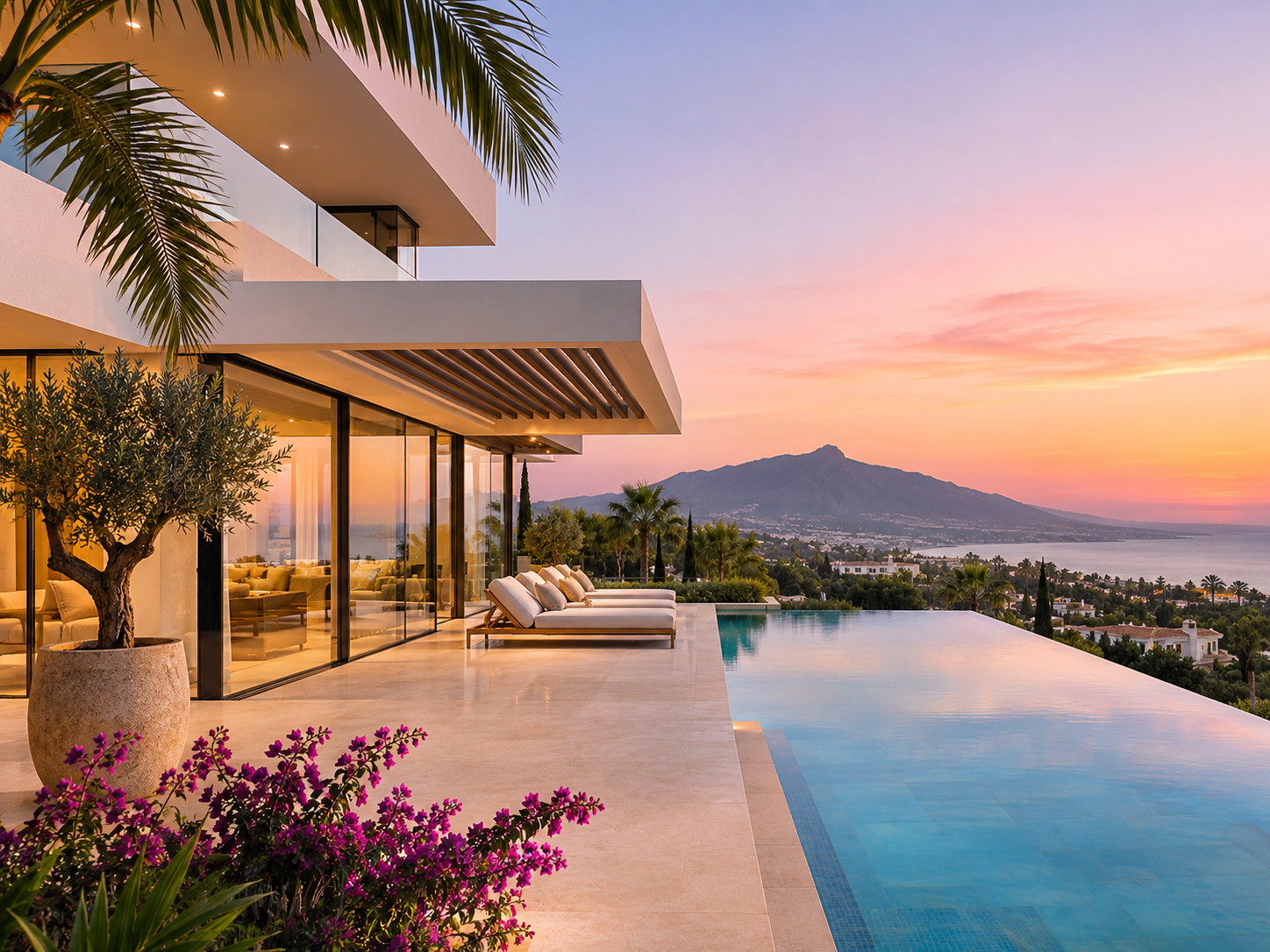
Excessive glazing can create uncomfortable summer temperatures, underground entertainment rooms can develop moisture problems and enormous terraces aren't always practical. Read on to discover which architectural features genuinely improve luxury living in Marbella, what buyers should examine and how design quality influences long-term property value.
Why Modern Architecture Has Become So Popular in Marbella
Contemporary villas have become an important part of Marbella's luxury residential market, particularly in Nueva Andalucía, Sierra Blanca, La Quinta and surrounding areas of Benahavís. Many international purchasers favour spacious interiors, extensive glazing and architectural layouts that connect the main living areas with terraces and private gardens.
These preferences have encouraged developers to create residences with dramatic façades, generous ceiling heights and increasingly sophisticated technical installations. Exceptional properties may also include private cinemas, wellness suites, underground garages and extensive home automation.
However, architectural quality deserves assessment beyond the first impression. A well-designed villa should respond to the property's orientation, climate and surrounding landscape while providing comfortable accommodation throughout the year.
Floor-to-Ceiling Windows: Spectacular Views With a Potential Cost
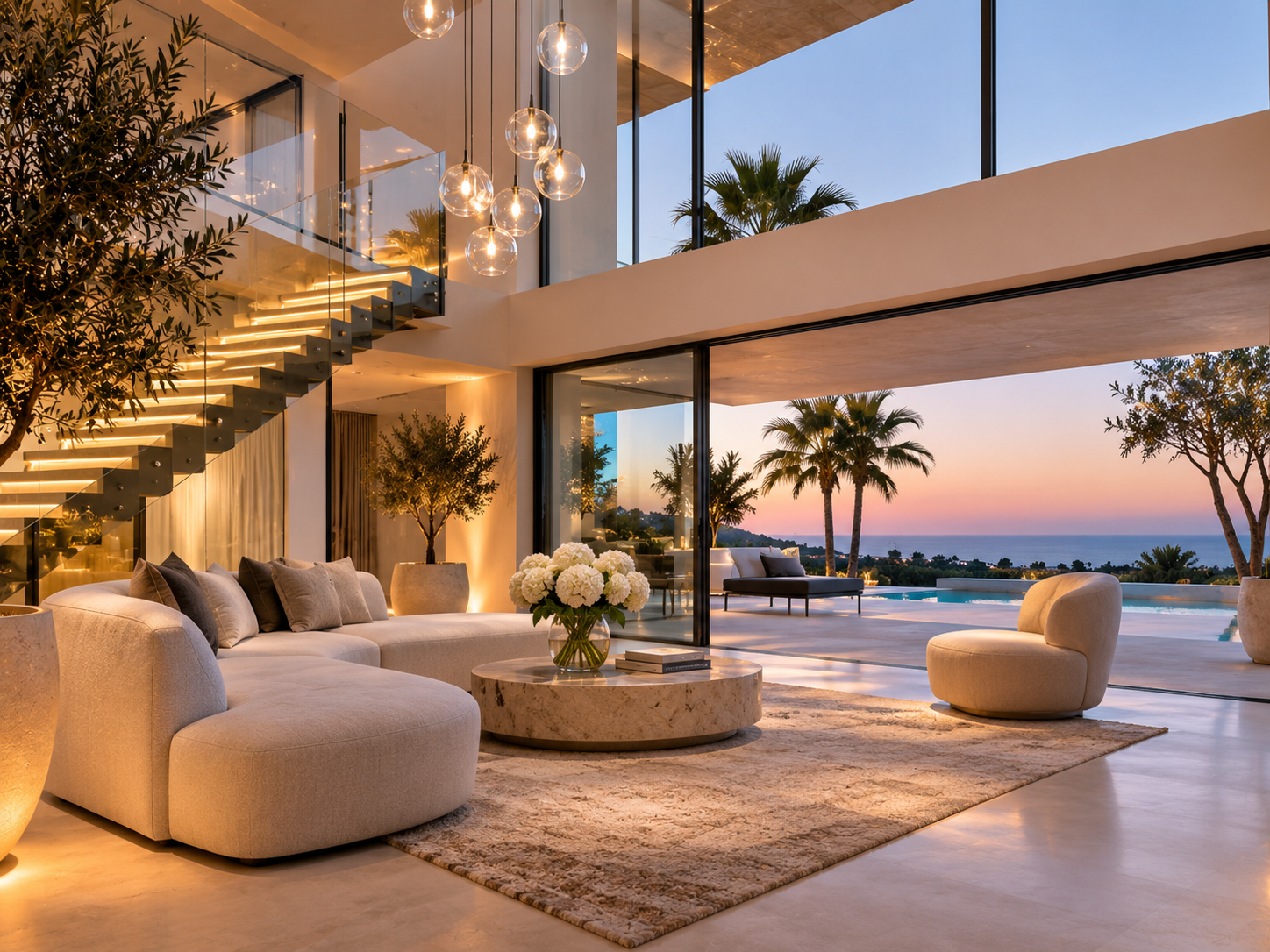
Extensive glazing has become one of the most recognisable features of modern Marbella villas, particularly when living rooms open towards the Mediterranean or surrounding golf courses. Large windows create attractive interiors and allow the architecture to take advantage of exceptional views.
However, their performance depends on glazing specifications, frame quality, orientation and protection from direct sunlight. Poorly designed glass façades can increase cooling requirements during summer and contribute to heat loss during colder periods.
Buyers should examine thermal performance, solar-control glazing and the condition of sliding mechanisms before purchasing. Large glass panels also require specialist maintenance and can be expensive to replace.
A magnificent six-metre window is certainly impressive, although its technical specifications deserve considerably more attention than the photograph taken at sunset.
Orientation: Why the Position of the Villa Matters More Than the Façade
Orientation influences natural light, interior temperatures and the usability of outdoor spaces throughout the year. Marbella's Mediterranean climate creates opportunities for extensive outdoor living, although summer sunshine can also make poorly positioned terraces uncomfortable.
South-facing villas generally benefit from substantial daylight, while southwest-facing residences can capture attractive afternoon and evening sunlight. East-facing bedrooms may provide comfortable morning exposure, particularly during warmer months.
However, orientation should be evaluated alongside the surrounding topography and neighbouring buildings. An elevated south-facing villa may experience different conditions from a residence sheltered beneath a hillside.
Buyers should examine sunlight at different times of day and consider seasonal changes before deciding whether the property's architectural layout suits their lifestyle.
Deep Roof Overhangs and Shading: The Features That Make Terraces Usable
A contemporary villa with extensive terraces can look extraordinary, but outdoor spaces become less attractive when direct sunshine makes them uncomfortable during much of the afternoon. Architectural shading therefore deserves attention from the earliest stages of property design.
Deep roof overhangs, adjustable external screens and carefully positioned pergolas can reduce direct solar exposure while allowing natural light into the interior. Their effectiveness depends on orientation and the seasonal position of the sun.
Well-designed overhangs can also allow lower winter sunlight to reach interior spaces while limiting exposure during summer.
Buyers should examine the actual shade available around outdoor dining areas, swimming pools and living rooms. A beautiful terrace becomes considerably more valuable when it remains comfortable beyond the fifteen minutes required for a professional photograph.
Open-Plan Living: Does More Space Always Mean Better Architecture?
Large open-plan interiors have become common in contemporary Marbella residences, particularly when kitchens, dining rooms and lounges occupy one substantial space overlooking the garden.
This arrangement can create an attractive social environment, especially for homeowners who frequently entertain guests or enjoy extensive family gatherings. However, acoustics, privacy and climate control deserve careful consideration.
A single enormous room can make temperature management more complicated, particularly when several glazed façades receive direct sunlight. Noise can also travel easily between cooking, dining and entertainment areas.
Buyers should examine whether the property provides additional private lounges, studies or family rooms. An elegant open-plan living space can be impressive, but the ability to enjoy a quiet conversation elsewhere deserves appreciation too.
Ceiling Heights: Impressive Architecture or Expensive Empty Space?
Double-height living rooms and dramatic entrance halls can create a strong architectural impression, particularly in luxury villas with contemporary staircases and extensive windows. Their proportions can also improve the sense of space and allow attractive natural light distribution.
However, exceptionally high ceilings influence heating, cooling, acoustics and maintenance requirements. Large glazed walls can increase thermal demands, while certain light fittings and windows may require specialist equipment for cleaning and repairs.
Buyers should assess whether these spaces have effective climate-control arrangements and practical access for maintenance.
A dramatic entrance hall can certainly justify attention, but several metres of unused vertical space contribute little to everyday convenience when the bedrooms and family areas have compromised layouts.
Indoor-Outdoor Living: How Well Does the Architecture Actually Work?
One of the strongest characteristics of Mediterranean residential architecture is the relationship between interior accommodation and outdoor living areas. Contemporary Marbella villas frequently incorporate sliding glass walls, covered terraces and direct connections between kitchens, lounges and swimming pools.
However, the effectiveness of this arrangement depends on practical details such as thresholds, drainage, shade and the distance between frequently used spaces.
Buyers should test sliding doors, examine the transitions between flooring materials and assess how outdoor areas connect with bathrooms and kitchens. Large openings should also provide appropriate weather protection and reliable locking systems.
A magnificent terrace loses some of its practicality when every visit to the outdoor dining table involves a lengthy journey through several rooms.
Infinity Pools: What Matters Beyond the Architectural Effect?
Infinity pools are among the most recognisable features of contemporary luxury villas, particularly on elevated plots overlooking Marbella's coastline. Their visual appeal comes from the relationship between the water surface and surrounding landscape, creating an apparently continuous perspective.
However, their construction and maintenance requirements can be more complicated than those of conventional swimming pools. Overflow channels, balancing tanks, pumps and waterproofing systems require appropriate design and regular technical supervision.
Buyers should request maintenance records and investigate the condition of circulation equipment, particularly when the swimming pool has operated for several years.
The position of the pool also matters. A spectacular infinity edge provides limited everyday comfort when the water remains shaded throughout the afternoon or the surrounding terrace experiences constant wind exposure.
Underground Floors: The Hidden Risks Behind Private Cinemas and Spas
Substantial basement accommodation has become increasingly common in Marbella's upper luxury market, particularly in villas with limited above-ground development capacity. These spaces may contain cinemas, gyms, wine cellars, indoor swimming pools and extensive garages.
However, underground rooms introduce technical considerations concerning waterproofing, drainage, ventilation and natural light. Poorly designed basements can develop persistent humidity or condensation, particularly where mechanical ventilation is inadequate.
Buyers should inspect walls, ceilings and floor junctions for moisture damage, examine drainage installations and request relevant construction documentation.
The legal status of basement accommodation also deserves verification because the permitted use and treatment of underground floor areas can differ according to applicable planning regulations.
A beautiful cinema is attractive, although its waterproofing deserves more attention than the size of the projection screen.
Energy Efficiency: Why an A-Rated Villa May Be Worth More Attention
Energy performance has become increasingly relevant to luxury property buyers, particularly when substantial villas contain extensive glazing, heated swimming pools and multiple climate-control systems.
Spain's Technical Building Code, known as the Código Técnico de la Edificación (CTE), establishes requirements concerning building energy consumption, thermal envelopes and other technical characteristics. The DB-HE provisions address energy efficiency, including the control of solar gains and the performance of building components.
Buyers should request the property's energy performance certificate and examine the technical systems that support its rating.
However, the certificate should be considered alongside actual utility consumption, particularly when the owner operates additional facilities such as heated pools or extensive outdoor lighting.
An efficient building can reduce annual expenditure, but its performance depends on correct installation, maintenance and the way residents use the property.
Heat Pumps, Underfloor Heating and Climate-Control Zoning
Contemporary luxury villas frequently contain air-to-water heat pumps, underfloor heating and integrated cooling systems designed to provide comfortable interior temperatures throughout the year.
These installations can improve energy performance when correctly specified, particularly when individual rooms have independent temperature controls. Zoning allows occupants to manage the conditions in bedrooms, guest accommodation and principal living spaces according to actual use.
However, buyers should investigate equipment capacity, installation age and maintenance records before assuming every modern system performs efficiently.
The relationship between heating and cooling also matters because Marbella experiences warm summers alongside cooler winter evenings.
A sophisticated climate-control system deserves careful assessment, especially when replacement components or specialist servicing could represent substantial future expenses.
Natural Ventilation: The Architectural Advantage Buyers Rarely Notice
Natural ventilation can contribute to residential comfort when the building's layout allows air to circulate through appropriately positioned openings. In Marbella, this can be particularly valuable during milder periods when mechanical cooling is unnecessary.
Cross-ventilation depends on the position of windows, room layouts and prevailing wind conditions. Courtyards and shaded exterior spaces can also influence the movement of air around the building.
However, natural ventilation should complement the property's thermal performance and mechanical systems rather than serve as the only strategy for maintaining comfortable conditions.
Buyers should examine whether windows can open safely, whether bedrooms benefit from ventilation and whether insect screens or security arrangements limit practical use.
A home that looks beautifully airy in photographs should also provide comfortable air circulation when its occupants actually live there.
Building Materials: Marble, Natural Stone and the Maintenance Question
Material selection influences the appearance, durability and ongoing maintenance requirements of a luxury villa. Marbella properties frequently feature natural stone, porcelain surfaces, timber, decorative concrete and extensive glass installations.
However, premium materials differ considerably in their resistance to moisture, staining, ultraviolet exposure and everyday wear. Certain natural stones require sealing, while timber exposed to outdoor conditions may need regular treatment.
Buyers should investigate the materials used in terraces, bathrooms and pool surrounds, particularly when surfaces become slippery when wet or receive prolonged direct sunlight.
The installation method also matters because even expensive materials can deteriorate when waterproofing, expansion joints or drainage have been poorly executed.
A beautiful stone terrace deserves appreciation, but its durability should matter at least as much as the name of the quarry.
Coastal Exposure: Why Materials Matter Near the Mediterranean
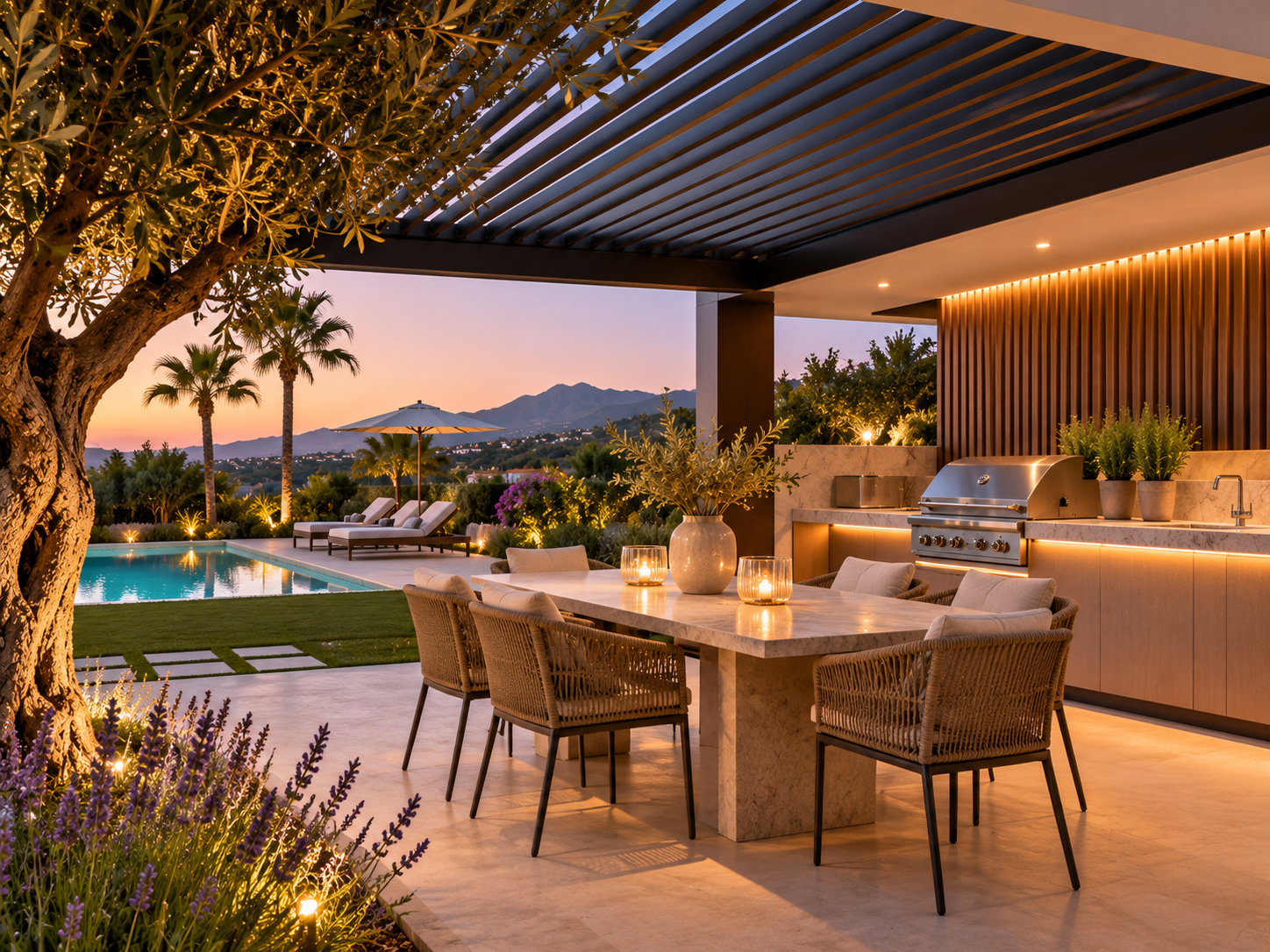
Properties situated close to Marbella's coastline experience environmental conditions that influence exterior construction materials, particularly salt-laden air, humidity and seasonal wind.
Metal railings, outdoor fittings, window components and mechanical equipment can deteriorate more quickly when unsuitable materials or protective finishes have been used. Buyers should examine exposed fixtures for corrosion, particularly in beachfront developments and villas with extensive exterior installations.
High-quality construction can include corrosion-resistant materials and properly specified protective systems, although their suitability depends on the location and exposure conditions.
Maintenance records provide useful evidence of how exterior materials have performed since construction.
A spectacular beachfront façade may justify a substantial premium, but buyers should investigate whether its materials are suitable for the environment that makes the location so attractive.
Smart Home Technology: Useful Convenience or Expensive Complexity?
Home automation has become a prominent feature of modern luxury villas, with integrated systems that control lighting, climate, security, blinds and entertainment equipment.
These installations can improve convenience, particularly for international homeowners who want to monitor their Marbella residences remotely. Automated shading, temperature controls and water-leak notifications may also contribute to more efficient property management.
However, complex systems can become expensive to maintain when proprietary equipment requires specialist support or older components become obsolete.
Buyers should ask which company installed the system, whether technical documentation is available and how easily individual components can be replaced.
An impressive touchscreen beside the entrance looks sophisticated, although the ability to operate the lights without calling an engineer deserves considerable appreciation.
Home Offices and Flexible Rooms: Architecture for Year-Round Living
Luxury villas increasingly accommodate activities that extend beyond holidays, particularly when international owners spend several months annually in Spain or work remotely.
A dedicated home office, quiet study or adaptable guest room can improve the practicality of a residence, especially when several household members require separate spaces.
However, room placement deserves attention. Offices situated beside entertainment areas may experience noise, while underground workspaces can lack sufficient natural light.
Buyers should examine internet infrastructure, acoustics, ventilation and the possibility of separating professional activities from family accommodation.
Flexible layouts can also support future changes in household requirements, particularly when children grow older or the property becomes a permanent residence.
A spectacular open-plan villa is attractive, but a quiet room with reliable connectivity can become one of its most frequently used spaces.
Garages and Access: The Practical Details Behind Luxury Architecture
Modern Marbella villas frequently include underground garages, motorised gates and substantial driveways, particularly when the residence occupies an elevated hillside plot.
However, architectural presentations rarely demonstrate how easily large vehicles can enter the property or manoeuvre within the garage.
Buyers should examine driveway gradients, turning areas, parking dimensions and access routes between the garage and principal accommodation. The position of staircases and lifts also influences everyday convenience.
Properties with underground parking deserve particular attention to drainage and waterproofing, especially when the driveway slopes towards the garage entrance.
An elegant entrance gate can create an impressive arrival experience, but the practical test involves entering with a large vehicle without requiring three attempts and assistance from everyone in the car.
Privacy by Design: How Architecture Can Protect Outdoor Living Spaces
Privacy depends on more than substantial perimeter walls, particularly in Marbella's hillside communities where neighbouring villas may occupy higher ground.
Architectural layouts can improve privacy through building orientation, internal courtyards, carefully positioned windows and protected outdoor spaces. Landscaping can also reduce exposure from nearby properties, although mature trees cannot always conceal elevated sightlines.
Buyers should examine terraces, swimming pools and bedrooms from different positions around the property, particularly when extensive glazing forms part of the design.
Future construction on neighbouring plots also deserves attention because new buildings can change the relationship between private spaces.
An architecturally impressive villa should provide comfortable areas for relaxation without requiring residents to close every curtain whenever someone arrives on the neighbouring terrace.
Architecture on Sloping Plots: The Hidden Cost of Spectacular Hillside Villas
Some of Marbella's most extraordinary contemporary residences occupy steep hillside plots, particularly around Sierra Blanca, La Quinta, El Madroñal and neighbouring Benahavís communities.
These locations can provide panoramic Mediterranean views, although their architecture often depends on substantial retaining walls, complex foundations and carefully designed drainage systems.
Terraced gardens, underground accommodation and infinity pools can increase technical complexity, particularly when structures interact with significant changes in ground level.
Buyers should request relevant engineering documentation and arrange independent inspections when retaining walls or signs of water movement create concerns.
The value of a hillside villa may depend partly on its exceptional views, but the structural systems supporting those views deserve an equally thorough assessment.
The Legal Side of Architecture: Does the Built Villa Match the Approved Plans?
Architectural design cannot be evaluated exclusively through appearance because the legal status of construction affects future ownership and redevelopment options.
Buyers should examine the property's building licence, approved architectural plans, completion documentation and relevant occupation authorisation or declaration.
Particular attention is necessary when a residence includes additional basement accommodation, enclosed terraces or structures completed after the original construction.
The existing building should be compared with the legally approved documentation, especially when extensive renovations have changed its appearance or floor area.
An independent architect and property lawyer can identify discrepancies requiring further investigation.
A spectacular contemporary extension may contribute significantly to the property's asking price, but its construction history should support the amount a buyer is prepared to pay.
Modern Architecture vs Renovated Mediterranean Villas: Which Holds Value Better?
Contemporary villas appeal to purchasers interested in modern layouts, extensive glazing and sophisticated technical systems. Their architectural presentation can attract substantial attention, particularly when properties occupy desirable hillside plots with Mediterranean views.
Renovated Mediterranean villas provide different characteristics, including mature gardens, traditional architectural proportions and established residential settings.
However, long-term property value depends on more than architectural style. Plot position, privacy, construction quality and the adaptability of interior spaces influence desirability across different buyer preferences.
A contemporary villa with impractical terraces may have weaker appeal than a beautifully renovated traditional residence with comfortable outdoor accommodation.
Investors should therefore examine the property's complete characteristics before assigning a substantial premium to fashionable architectural features.
Which Design Features Matter Most for Long-Term Resale Value?
Architectural features that contribute to everyday comfort and remain difficult to reproduce can support long-term residential appeal, particularly when combined with a desirable location.
Panoramic views, practical orientation, generous usable terraces and well-designed interior accommodation can attract buyers across different architectural preferences.
Energy-efficient construction and reliable technical systems may also contribute to attractiveness, especially when potential purchasers consider annual ownership expenses.
However, highly individual interior choices and elaborate specialist facilities may appeal to a narrower audience. A private cinema or decorative wine cellar can be desirable, but their value depends on the priorities of the eventual purchaser.
The strongest resale position generally comes from balanced architecture, durable construction and a property that accommodates different lifestyles without extensive modifications.
The Architectural Features Buyers Should Examine During a Viewing
A luxury villa viewing should assess technical quality alongside visual presentation, particularly when the property includes extensive glazing, substantial basements and complex mechanical installations.
The most useful checks include:
Examine orientation and direct sunlight in the principal living areas throughout the day;
Verify the thermal specifications and operation of large windows and sliding doors;
Assess shade, wind exposure and the practical usability of outdoor terraces;
Inspect basement ventilation, waterproofing and drainage arrangements;
Request the energy performance certificate and maintenance records for climate-control systems;
Examine exterior materials for corrosion, deterioration or unsuitable installation;
Test home automation, security controls and major technical equipment;
Review garage access, driveway gradients and internal circulation;
Compare the physical building with approved architectural plans and legal documentation;
Arrange an independent technical inspection before signing a binding purchase agreement.
These checks help buyers distinguish architectural quality from impressive presentation, particularly when several properties occupy similar multimillion-euro price categories.
What Makes a Modern Marbella Villa Worth Its Asking Price?
Marbella's luxury residential market contains exceptional contemporary homes, from minimalist hillside mansions to expansive golfside villas and beachfront residences. However, the most successful architecture responds to the property's location, climate and everyday requirements rather than concentrating exclusively on dramatic appearances.
Large windows deserve appropriate solar protection, terraces need practical shade and technical installations should remain reliable and manageable throughout the year. Well-designed floor plans, durable materials and carefully considered privacy also contribute to the ownership experience.
For international purchasers, architectural quality becomes particularly important when evaluating long-term maintenance expenses and potential resale appeal.
A striking façade can attract attention during the first viewing, but the property's comfort, construction quality and practical design determine how enjoyable it remains after several years of ownership.
Interested in purchasing a contemporary luxury villa in Marbella or the surrounding Costa del Sol? Explore exclusive real estate opportunities with Stefan Nita and find a residence that combines exceptional architecture, everyday comfort and long-term investment appeal.