
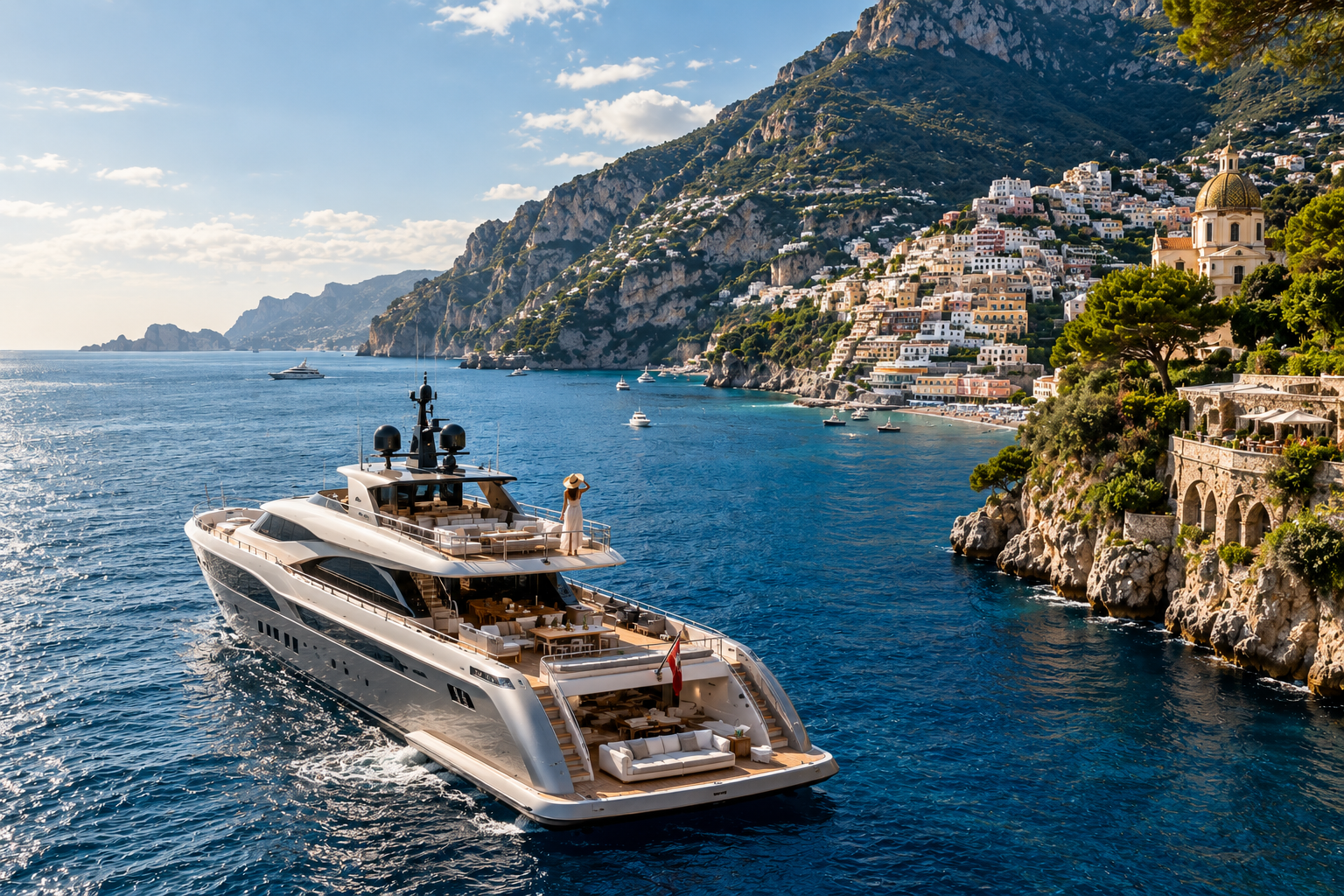
A destination that works beautifully for a two-week charter may be less convenient for an owner who flies in regularly, travels with family or wants to spend several months ashore. From the French Riviera and Sardinia to Greece and the Adriatic, each cruising region offers a different combination of marinas, island access, hospitality and residential opportunities. Here is what deserves attention when choosing your Mediterranean base in 2026.
Where is Mediterranean yachting heading in 2026?
The Mediterranean remains a major destination for luxury yacht cruising, with established centres in France, Italy and Spain alongside extensive cruising areas in Greece and the Adriatic. Yacht owners can choose between marinas close to international airports, island destinations with limited road access and waterfront developments that combine berths with residential property. The most suitable location depends on how the yacht will be used, which coastlines the owner intends to explore and how much time the family expects to spend at the residence between trips.
These characteristics matter just as much when choosing a property as they do when planning a cruising itinerary. A residence near Palma offers a different daily routine from a villa on a smaller Greek island, even if both provide exceptional sea views. The preferred marina, airport connections, local services and seasonal activity should therefore be considered before narrowing the property search to a particular town or coastline.
The French Riviera remains a centre of Mediterranean yachting
The Côte d’Azur offers an established network of marinas and yacht services along a relatively compact coastline. Monaco, Antibes, Cannes and Saint-Tropez are close enough to feature in the same cruising itinerary, while Nice Côte d’Azur Airport provides international connections for owners who travel frequently. The region also hosts the Monaco Grand Prix, Cannes Film Festival, Cannes Yachting Festival and Monaco Yacht Show, which bring additional activity to its harbours, hotels and restaurants at different points in the year.
The Riviera’s concentration of desirable destinations also creates practical considerations. Berths in popular harbours can be difficult to secure during major events and the busiest summer weeks, while road traffic can make transfers between a residence and marina considerably longer than the distance suggests. Owners who intend to use their yacht regularly should compare marina arrangements and actual journey times before selecting a property.
Monaco and Antibes for established marina infrastructure
Monaco attracts yacht owners who value its international setting, hospitality and proximity to other Riviera destinations. Antibes offers established marine infrastructure and access to specialist services, including maintenance and refit businesses in the surrounding area. Both locations provide access to the wider coastline, although berth suitability and availability depend on the vessel and the marina’s individual requirements. For residential buyers, the decision often involves comparing proximity to the harbour with privacy, property type and access to the services they expect to use throughout the year.
Before choosing a residence near either harbour, examine the arrangements that will shape everyday yacht use:
→ Berth suitability: Confirm the maximum permitted length, beam and draught, along with the availability of a berth appropriate for the vessel.
→ Transfer times: Check the journey between the property and marina during peak summer traffic, rather than relying on the distance shown on a map.
→ Marine services: Identify nearby maintenance, provisioning and crew-support facilities that correspond to the yacht’s requirements.
→ Residential privacy: Compare waterfront apartments, villas and hillside estates according to their access arrangements and proximity to busy coastal roads.
Cannes and Saint-Tropez for hospitality and coastal living
Cannes offers luxury hotels, restaurants and access to the Lérins Islands, while Saint-Tropez combines a historic harbour with beach clubs and coastal destinations around its gulf. Both attract substantial seasonal activity, which can be part of their appeal for owners who enjoy an active summer social calendar. Property buyers should nevertheless consider how the atmosphere changes outside the main season and whether the preferred residence provides convenient access to the harbour without placing everyday travel at the mercy of peak-season congestion.
Greece offers several very different yachting lifestyles
Greece’s extensive coastline and numerous islands allow owners to choose between itineraries that prioritise established luxury destinations, traditional coastal villages or quieter anchorages. Athens provides international airport access and marina infrastructure close to the Saronic Gulf, while the Cyclades and Ionian Islands offer distinct cruising environments. The choice of region matters because a property in Corfu and a residence in Mykonos serve different itineraries, with different transfer arrangements, weather considerations and opportunities for exploring neighbouring islands.
The Cyclades for island-hopping and luxury hospitality
Mykonos, Paros and Antiparos attract visitors interested in luxury hospitality, restaurants and beach clubs, while islands such as Milos and Sifnos offer additional opportunities to explore traditional settlements and attractive coastal landscapes. The distances between islands make it possible to plan varied itineraries, although passages must account for the vessel’s capabilities and prevailing weather. The Meltemi winds can affect Aegean cruising during summer, so the apparent proximity of two islands should never be the only factor used to plan a route.
For buyers considering a residence in the Cyclades, the following details can influence how practical the property becomes over several summer seasons:
→ Arrival arrangements: Check direct flights, connecting flights and ferry services, particularly when travelling with guests or substantial luggage.
→ Embarkation point: Establish where the yacht can berth or collect passengers and how the transfer works when the preferred harbour is busy.
→ Seasonal services: Confirm which restaurants, shops and essential services remain available outside July and August.
→ Property accessibility: Assess road access, parking and the journey from the residence to the harbour, especially on islands with narrow coastal roads.
The Ionian Islands for sheltered bays and greener landscapes
Corfu, Paxos, Lefkada and Kefalonia offer a different setting from the Cyclades, with green landscapes, coastal villages and numerous bays. The region appeals to owners interested in itineraries that include shorter passages between many popular destinations, although local weather and navigation conditions still require careful planning. Corfu also provides international airport access and an established residential market, making it relevant for buyers who expect to return frequently or spend extended periods on the island.
A property search in the Ionian Islands should begin with the owner’s preferred cruising area and embarkation arrangements. A residence that is convenient for exploring Corfu and Paxos may offer a different experience from one chosen primarily for access to Lefkada and the islands farther south. Buyers should also compare marina facilities, seasonal flight schedules and the availability of everyday services before committing to a particular location.
Sardinia combines exclusive resorts with exceptional cruising grounds
Northern Sardinia has an established reputation for luxury yachting, particularly around Costa Smeralda and Porto Cervo. The coastline provides access to the Maddalena Archipelago, while Corsica lies across the Strait of Bonifacio, allowing owners to incorporate both islands into a longer itinerary. Porto Rotondo and Cala di Volpe offer additional coastal and residential settings, with villas and private estates that appeal to buyers who value privacy and proximity to the sea. The choice between these locations should reflect the preferred harbour, travel arrangements and the amount of time the property will be occupied outside summer.
Porto Cervo and the Maddalena Archipelago
Porto Cervo combines marina infrastructure with luxury hospitality and access to the surrounding Costa Smeralda coastline. The nearby Maddalena Archipelago is known for its clear water and attractive bays, although its protected marine environment means that navigation, anchoring and mooring rules must be checked before visiting individual areas. Owners planning to cruise toward Corsica should also consider weather conditions in the Strait of Bonifacio, where conditions can differ considerably from those inside a sheltered bay.
For a buyer who intends to use a yacht regularly, a Costa Smeralda property should be assessed against several practical requirements:
→ Preferred harbour: Compare access to Porto Cervo, Porto Rotondo and other suitable embarkation points before selecting the residential area.
→ Cruising plans: Consider whether most trips will remain around northern Sardinia or regularly include Corsica and other Mediterranean destinations.
→ Airport connections: Check the journey to Olbia Costa Smeralda Airport and the availability of flights during the months when the property will be used.
→ Off-season living: Review the availability of restaurants, shops and essential services if the residence will be occupied beyond the main summer period.
Mallorca offers a practical base for yacht owners who stay longer
Mallorca combines established marine services with international air connections and residential infrastructure that supports extended stays. Palma is an important yachting centre, with marinas, shipyards, refit facilities and specialist businesses serving a wide range of vessels. The island also offers access to the wider Balearic cruising area, including Ibiza and Formentera, while its own coastline provides contrasting settings between Palma, Port d’Andratx, Sóller and Port de Pollença. For owners who travel regularly between their Mediterranean residence and other countries, the relationship between the property, airport and preferred marina can be particularly important.
Which part of Mallorca should you consider?
Palma offers access to urban amenities and established yacht services, while Port d’Andratx provides a coastal residential setting around a natural harbour. Port de Pollença appeals to buyers interested in the island’s northern coastline, and Sóller offers a distinctive setting between the mountains and the sea. The most suitable location depends on whether the residence will serve primarily as a summer retreat, a base for frequent yacht departures or a home used for substantial periods throughout the year.
Croatia offers varied itineraries along the Adriatic
Croatia’s coastline and numerous islands provide opportunities to combine historic towns, restaurants and secluded bays within the same cruising itinerary. Split and Dubrovnik are important points of arrival, while Hvar, Vis and Korčula offer different coastal experiences. The distances between many popular destinations allow owners to visit several islands during a summer trip, subject to weather, vessel characteristics and local navigation requirements. Croatia also has an established marina network, although suitable berths in busy destinations may require advance planning during peak season.
Split, Hvar and the islands of central Dalmatia
Split provides access to the central Dalmatian islands and has an international airport, making it a practical starting point for owners and guests arriving from abroad. Hvar offers a historic harbour and active summer hospitality scene, while nearby islands provide additional anchorages and opportunities to explore the coastline. Vis offers a quieter setting, and Korčula combines a historic old town with attractive coastal surroundings. Each destination has different harbour arrangements, so owners should confirm where the yacht can berth and how passengers will reach the property or planned destination.
The following considerations are particularly relevant when comparing residential locations along the Croatian coast:
→ Mainland or island property: Check whether the residence can be reached directly by road or requires a ferry, private boat or other transfer.
→ Airport access: Compare the full journey from Split or Dubrovnik Airport, including any onward marine connection.
→ Preferred cruising area: Choose a location that corresponds to the islands and coastal towns the owner expects to visit most frequently.
→ Seasonal availability: Examine restaurants, transport connections and essential services during the months when the property will be occupied.
Dubrovnik and the southern Adriatic
Dubrovnik provides access to the southern Dalmatian coastline and combines an internationally recognised historic setting with established tourism infrastructure. It can serve as a starting point for itineraries along the Croatian coast or toward Montenegro, subject to the applicable entry and departure requirements. Buyers considering property in or around Dubrovnik should examine road access, privacy and transfer arrangements to the preferred marina. A coastal residence farther from the busiest parts of the city may offer a different daily experience, but the journey to the yacht and airport should remain practical for regular use.
Montenegro combines modern marina developments with coastal residences
Montenegro offers a distinctive Adriatic setting around the Bay of Kotor, where historic settlements and steep mountain landscapes surround sheltered coastal waters. Tivat has developed into an important luxury yachting location, supported by Porto Montenegro and the surrounding residential and hospitality infrastructure. The wider coastline also provides access to the southern Adriatic, allowing owners to plan itineraries that include neighbouring cruising regions. For property buyers, Montenegro offers a choice between residences within marina-oriented developments and homes in other coastal locations around the bay.
Porto Montenegro and the Bay of Kotor
Porto Montenegro combines yacht facilities with residences, hotels, restaurants and retail spaces, making it relevant for buyers who want the marina and everyday amenities within the same development. Other locations around the Bay of Kotor offer different architectural settings, levels of privacy and access arrangements. The decision should account for the yacht’s berth requirements, the journey from the residence to the marina and the buyer’s preferred balance between an active waterfront environment and a quieter coastal home.
Before selecting a property in Montenegro, examine the following details:
→ Marina arrangements: Confirm berth suitability, availability and the services required for the yacht.
→ International travel: Compare access to Tivat Airport and other airports that may be practical for the property’s location.
→ Cruising across borders: Check the applicable vessel documentation and entry requirements when planning trips between Montenegro and neighbouring countries.
→ Residential setting: Compare marina residences with villas and apartments elsewhere around the bay according to privacy, road access and proximity to everyday amenities.
What should yacht owners check before buying Mediterranean property?
A waterfront location can be attractive without being particularly convenient for regular yacht use. The property may be close to the sea but far from a suitable marina, or the nearest harbour may lack the berth dimensions and specialist services required by the owner’s vessel. Buyers should establish their practical requirements before comparing individual homes, particularly when the residence will serve as a regular embarkation point for family members and guests.
The following checklist brings together the details that deserve attention during the property search:
→ Berth availability and dimensions: Confirm whether the preferred marina can accommodate the yacht’s length, beam and draught, and investigate the arrangements for securing a suitable berth.
→ Transfer time to the marina: Check the journey during peak summer periods, when traffic and harbour activity may affect arrival and departure plans.
→ Airport connections: Review direct flights, seasonal schedules and the full transfer from the airport to the residence or yacht.
→ Maintenance and provisioning: Identify nearby facilities for technical work, refit, supplies and crew support, according to the vessel’s requirements.
→ Year-round services: Examine healthcare, restaurants, shops and transport connections if the residence will be occupied beyond the summer season.
→ Property and marina arrangements: Obtain appropriate local advice on ownership requirements, applicable restrictions and any separate agreements associated with yacht berthing.
A buyer who regularly cruises around the Cyclades will have different location requirements from someone whose summer itinerary concentrates on Monaco, Saint-Tropez, Sardinia and Corsica. The property search should therefore begin with the destinations the owner expects to visit most frequently, followed by the practical requirements of the residence itself. For buyers exploring luxury homes across the region, Stefan Nita can assist with identifying properties that correspond to their preferred coastal locations, privacy requirements and Mediterranean lifestyle.
How do Mediterranean yachting destinations compare for property ownership?
The right residential base depends on how the owner intends to divide time between the yacht and the property. A buyer who flies in for short visits may place greater emphasis on airport access and efficient marina transfers, while someone spending several months in the Mediterranean may prioritise healthcare, restaurants and other year-round amenities. The preferred cruising region is equally important: choosing a property primarily for its reputation may be inconvenient if the yacht is regularly used hundreds of nautical miles away.
These categories are starting points for a property search rather than fixed descriptions of every town or residence. Individual properties within the same destination can differ considerably in privacy, accessibility and proximity to marine facilities. The most useful comparison is therefore between specific homes, their associated travel arrangements and the owner’s actual cruising plans.
Finding a Mediterranean home that suits your yachting lifestyle
The French Riviera, Greece, Sardinia, Mallorca, Croatia and Montenegro offer distinct combinations of cruising opportunities, marina infrastructure and residential living. Before choosing a property, establish where the yacht will be based, which destinations you intend to visit and how often you expect to travel between the residence, marina and airport. These details can help narrow the search to locations that work both on the water and ashore.
Looking for a waterfront villa, private coastal estate or luxury residence near your preferred marina? Explore Mediterranean luxury real estate with Stefan Nita and find a home that fits the way you intend to spend your time in the Mediterranean.